If you’d told me a few years ago that I’d be teaching yoga through a laptop screen, I’m not sure I would have believed you. One of the things I love most about teaching is being in the room with people. I love the conversations before class begins, the smiles (and sometimes laughter) that accompany a challenging flow, noticing when someone finally finds ease in a posture that has challenged them for weeks, or watching friendships slowly grow between people who happened to roll out their mats beside each other.
Online yoga is different. Not worse or better, just different.
I’m still learning what it means to teach well in this space. Every week I discover something new, like a cue that lands more clearly without the possibility of hands-on adjustments, a better camera angle, a reminder to pause a little longer because moments of silence are important. Like any practice, teaching online has become an exercise in adapting, listening and letting go of certain expectations.
In a studio, I can glance around the room and instantly see how everyone is moving and what the energy level is. I can offer tiny adjustments or notice when someone needs a different variation. Online, I can’t always do that.
So instead of trying to recreate the studio experience exactly, I’ve realised something important: online yoga invites all of us to become a little more independent. My role isn’t to perfect every pose for you. It’s to guide, suggest, encourage and create a space where you can listen to your own body. And that’s what yoga has always been about 🙂
And while there are things I miss about teaching in person, there are also things I’ve come to love.
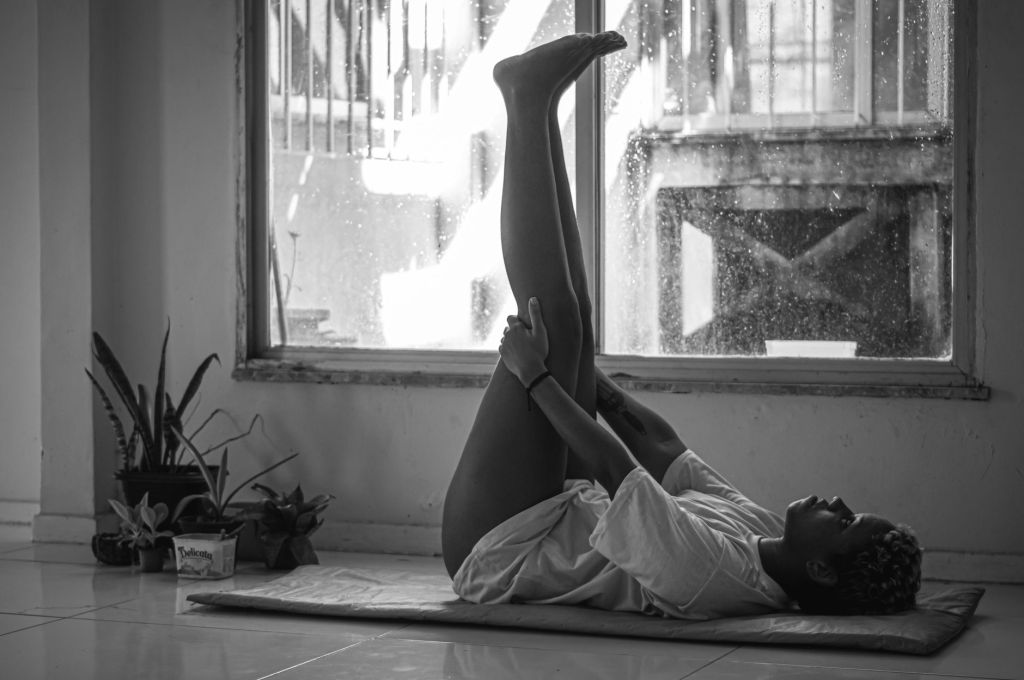
I love seeing your pets wander into class. I love that some of you practise in your pyjamas. I love that someone might join from their living room one week and a quiet holiday cottage the next. I love knowing that yoga doesn’t have to stop because life gets busy, because you’re travelling, or because making it across the city to a studio feels impossible that day.
To me, that’s where yoga becomes less of an escape from life and more of a way of being in it.
Of course, practising at home comes with its own challenges. The washing machine beeps, someone rings the doorbell, a partner asks a “quick question,” or your cat decides Savasana is the perfect time for cuddles (though this is arguably a perk).
The goal isn’t to create a perfectly peaceful yoga studio in your home. The goal is simply to make enough space for your body, your breath and a little time that belongs to you.
With that in mind, here are a few small ideas that might make your online practice feel even more enjoyable.
Give yourself enough space
You don’t need a dedicated yoga room or an Instagram-worthy corner of your house. If some arrangement is needed, simply move enough furniture so you can stretch your arms without knocking over a lamp and give yourself a little extra room in case you wobble out of Half Moon. That’s enough.
If you can, let the people you live with know you’ll be practising for the next hour. You might still get interrupted, and that’s okay, but sometimes setting that gentle boundary can make all the difference.
Create a little ritual
One of the unexpected gifts of practising at home is that you get to shape the experience however you like. Maybe that means dimming the lights before class begins, lighting a candle, diffusing an essential oil you love, or simply opening a window to let some fresh air in. Perhaps you keep your favourite cosy jumper, scarf or blanket nearby for Savasana, or make yourself a cup of tea to enjoy afterwards as a way of easing back into the rest of your day.
None of these things is essential. Yoga doesn’t require beautiful surroundings or elaborate rituals. But sometimes a few small touches can gently tell your nervous system, it’s time to slow down now.
Make the space your own
One thing I love about online yoga when I practice myself is that you get to choose the soundtrack. If you enjoy practising in silence, wonderful. If you prefer gentle instrumental music or a more upbeat playlist that always makes you feel grounded yet energize, use it. You can adjust the lighting, the temperature, even the direction your mat faces. Unlike in a studio, this space belongs entirely to you.
Use what you already have
Yoga props are lovely, but they’re definitely not essential. A couple of sturdy books work brilliantly instead of blocks. A rolled blanket can replace a bolster. A scarf, dressing gown tie or belt can become a strap. You can even go all out and use multiple pillows and your favourite blanket closing relaxation. I encourage you to be creative and use what’s already available to you wherever you’re practicing.
Give yourself a few extra minutes
If possible, even sitting quietly for two or three minutes before or after we begin, taking a few slow breaths or simply noticing how you’re feeling, can completely change the quality of your practice. Afterwards, if time permits, stretch a little longer, make yourself that cup of tea or simply sit quietly for another minute before stepping back into the rest of your day.
Perhaps the biggest invitation, though, is this: let go of the idea that your home practice should look like your studio practice.
Without a room full of people moving together, you might rest more often. You might spend longer in Child’s Pose. You might choose a simpler variation than you normally would. Or you might feel energized after we say goodbye and end up spending another 30 minutes exploring a posture we just touched on or doing your own thing completely. And I think that might be the best part, learning to really listen to yourself without comparing yourself to anyone else!
As you’ve likely heard me say if we’ve practised together before: some days yoga feels energising, other days it feels slow, distracted or unexpectedly emotional. All of those experiences belong, and showing up is more than enough.
Let’s keep the conversation going
One thing I do miss from studio teaching is those little conversations before and after class. Those spontaneous moments are harder to create online, but I don’t want to lose them entirely.
So please know that my “virtual door” is always open.
If you ever have feedback, questions, requests for future classes or simply want to say hello, I’d genuinely love to hear from you. Knowing what feels supportive, what feels confusing or what you’d like to explore helps me become a better teacher. I’m still learning, and your experience really matters to me.
This online community is something we’re building together.
Thank you for trusting me enough to invite me into your homes each week ❤


Leave a Reply